Why the Quebec calculation needs more information
Quebec determines child support through a provincial model built around the incomes of both parents, the number of children, parenting time, and specified expenses. The calculation uses the Child Support Determination Form and Quebec's annual basic parental contribution table.
A one-income federal table look-up falls short of that calculation. The official Quebec tool accepts the additional facts and can produce a printable result. A formal court application still requires the prescribed determination form and supporting documents.
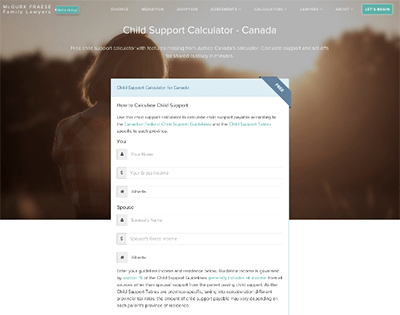
When the federal table may be relevant
For spouses seeking support under the Divorce Act, the parents' places of residence affect the applicable model. Quebec's official guidance directs a family with both parents in Quebec to the provincial model. Where one parent lives outside Quebec, it directs the family to the Federal Child Support Guidelines, subject to the option of agreeing on the Quebec model.
The residence question concerns the legal rule, rather than a preference between two calculators. Confirm the governing statute and each parent's residence before relying on a federal table figure.
Use the official Quebec route for the usual case
Start with Quebec's official child support calculation tool. Gather both parents' annual income information, the parenting schedule, the number of children, and records for childcare, post-secondary education, health, or other eligible expenses. The province publishes a new contribution table for each calendar year, so the calculation year matters.
A negotiated figure may still require review against the applicable rules and the child's circumstances. A court order or enforceable agreement supplies the operative payment terms.
Build the calculation from current records
For the Quebec model, each parent calculates annual income under the provincial rules. Tax returns and notices of assessment provide the starting documents, while current employment, business, benefit, pension, or investment records may be required to establish the figure used on the form. The calculation then accounts for the applicable parenting-time category and eligible expenses.
Keep the completed determination form, source documents, expense records, and parenting calendar together. If a parent seeks a different amount, those records show which input or legal issue drives the difference. They also make it easier to distinguish an annual table update from a change in income, parenting time, or expenses.
When the calculation needs more information
The table result answers one question: the monthly Schedule I amount for the three inputs entered. A fuller support calculation brings in:
- shared parenting time or split parenting arrangements
- section 7 special or extraordinary expenses
- undue hardship claims
- income that is disputed, imputed, self-employment income, or income that varies
- income above $150,000
- retroactive support or arrears
- any order, agreement, variation, or enforcement decision
Use the estimate as a starting figure. The enforceable amount comes from the applicable order or agreement, interpreted alongside the Guidelines and the evidence for the family.
Official sources and services
- About child support (Gouvernement du Quebec, verified August 2, 2026)
- Quebec model for the determination of child support payments (Gouvernement du Quebec, verified August 2, 2026)
- Child support payments calculation tool (Gouvernement du Quebec, verified August 2, 2026)
- Basic parental contribution determination tables (Gouvernement du Quebec, verified August 2, 2026)
- Federal Child Support Guidelines (Justice Laws Website, verified August 2, 2026)